
13 Questions to Ask in Your Next Interview - ApplicantStack
The article from ApplicantStack, authored by Allie Blackham, emphasizes moving beyond common, rehearsed interview questions to ask 13 insightful, specific questions that foster genuine connection and better assess candidates’ potential performance, especially valuable for small business owners during growth phases.

13 Questions to Ask in Your Next Interview
Feb 27, 2024
HR and Recruiting Industry Information, Recruiting Best Practices


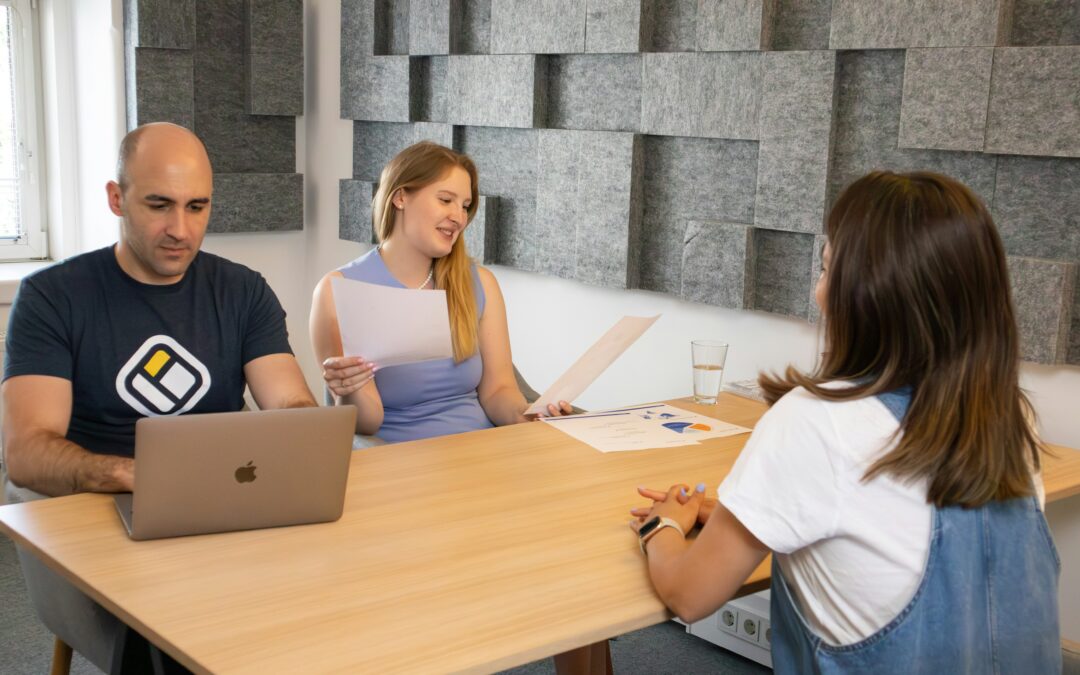
Most people looking for a job can rattle off a series of the most common interview questions without even thinking about it. At its core, the interview process is a way to get to know how your candidate will perform at work. Conventional wisdom says the old standby interview questions will get at those core answers; after all, if they didn’t work, why would people still be using them?
We’d like to suggest that looking beyond the most common interview questions can generate some insightful conversation. A small business owner can’t afford to spend time just going through the motions, especially in a period of exciting growth. Once you’ve identified the best candidates, we have some ideas for the best interview questions to ask.
Leave the Vague Questions Behind
People active in job searching will likely have answered some version of “Tell us your best and worst attributes” many times over. A rehearsed answer may not help the people on either side of the table gain any insight. LinkedIn gathered interviewing feedback from hundreds of participants and the key indicator was that a connection with those going through the interview process is a primary indicator of a job offer.
Far from just a self-help term, connection is the way to engage your candidate so they are comfortable revealing aspects of themselves that go beyond the lines of the resume. It says you’re willing to engage in a dialogue that isn’t just the interviewer asking a question and the candidate giving the expected answer. It invites the job seeker to ask questions during the process, which can demonstrate collaboration and open communication. It can put both parties in the interview at ease and open to meaningful interactions. Connection releases the interviewer from a strict question list. It allows organic conversation that reveals the right person for the job.
Interrogate your list of interview questions with this thought: Do I actually care about the answer to this question? If your answer is “not really,” it’s time for some new questions.
Interview Question Examples
The following examples are for two categories of questions: Behavioral and Leadership.
Behavioral interviews allow the candidate to describe and assess reactions to professional situations. Ideally, they feel comfortable offering candid and introspective answers.
Leadership questions might be used when promoting internally or considering a new role for an existing employee. Since you likely have some experience with the employee’s strengths and weaknesses, you can focus your questions on how they might respond to a promotion or added managerial responsibilities.
Behavioral Question Examples
- 1.Describe some of your best working relationships or collaborations. What made them work well? This question shines a light on collaboration as a company value, and lets a candidate show you how comfortable (or uncomfortable) they are with teamwork.
- 2.Tell me about a time you were under a lot of stress. How did you cope? Did you take any lessons away from that experience? This question helps you see what situation a candidate classifies as stressful and how they handle it.
- 3.Have you ever had a job with numerous responsibilities? How do you keep organized and give appropriate attention to all of it? This question probes the candidate’s ability to multitask and can reveal their personal organizational systems. It can indicate if they are familiar with task management software or applications that your company also uses.
- 4.Can you think of a difficult conversation you had with a client or co-worker? How did you handle it and what lessons did you learn? All prospective employees may not be able to answer this question candidly, but what they choose to tell may still be revealing about conflict management style.
- 5.Tell me about a professional role model or mentor. What did they teach you? This question gives insight into teachability, how someone values a mentor relationship, and maybe even whether they see themselves as a potential mentor.
- 6.What are previous job responsibilities you’d rather not do again? This question invites the candidate to be introspective and honest. It shows empathy for the reality that every aspect of every job isn’t perfect.
- 7.What job responsibilities have you enjoyed the most? Conversely, this question offers a chance for them to be positive and describe their talents from a different angle.
- 8.What do you do for work/life balance? This question helps you learn about the person’s hobbies (always within legal question parameters) and shows the company values prioritizing life outside work.
Leadership Question Examples
- 1.Are you excited by the challenges of leadership? How would you describe those challenges? This question is a fairly direct way of asking someone if they feel ready to take on a more managerial role. Body language may be an important answer along with what’s said.
- 2.What is your ideal team structure? This question helps you learn the candidate’s prior experience on teams and how they prefer to work.
- 3.Think of a project that hasn’t gone smoothly. How do you collaborate with team members to address issues? This question can help you learn about the candidate’s tolerance for confrontation or avoidance and the methods they use to communicate with co-workers.
- 4.What process do you use to determine time requirements for your projects? This question can help you learn what software programs or systems the candidate uses for time management.
- 5.Have you ever served as a trainer or mentor? What did you like or not like about that role? This question ideally allows the candidate to be honest about things that did and didn’t work for them in the past. A follow-up question might be something about what they might have learned being mentored themselves.
As the interviewer, there’s room to ask follow-up questions if you want more details, like “How did that change your view of your work?” or “What have you taken from that experience that’s influenced your professional life?” or “Is there anything you would do differently?” Follow-up questions show you’re engaged and listening and fostering the all-important connection during the interview.
Going into an interview organized is vital to encourage efficiency and connection. In particular, employees in a small business often wear multiple hats and need access to hiring information. A tool like ApplicantStack not only helps you keep track of your potential hires, but it can be a place for collaboration on the best interview questions and scheduling interviews with top candidates. When your company is growing, ApplicantStack can help. Try it for free today!

Latest posts by Allie Blackham ( see all)
- Get More Applicants and Reduce Drop-Off - October 14, 2026
- Exit Interview Questions That Get Honest Answers (With Free Checklist) - October 7, 2026
- Background Check Compliance: What Every Employer Needs to Know in 2026 - September 30, 2026

Allie Blackham|Aug 19, 2026
Hiring new employees is no small task: it takes hours of company time and money to recruit, interview, and select top talent. Once you’ve got a new employee on board, you want to turn that hiring investment into a good experience for both of you. That’s where onboarding comes in. Read on for some effective […]

Allie Blackham|Aug 5, 2026
Building an effective hiring process from scratch involves identifying your company’s needs and setting a path to find quality applicants. By examining past hiring practices and implementing new strategies, you can build a more efficient process. Read on for some ways to create a hiring process that gets results. Primary Elements of the Hiring Process […]
Allie Blackham|Oct 14, 2026
Candidate drop-off occurs when a qualified candidate withdraws before you make an offer. You can reduce it by simplifying your application, returning feedback within 48 hours, sharing pay and timelines upfront, and using an applicant tracking system to automate follow-up. In a recruiter poll by talent acquisition strategist Alissa Henricksen, nearly half saw the most […]
Allie Blackham|Oct 7, 2026
Updated October 2026 An exit interview is a structured conversation, held in an employee’s last days or weeks, to learn why they are leaving and what the company should change. The most effective exit interviews are run by someone other than the employee’s manager, scheduled in the final week (not the last day), and use […]

Allie Blackham|Sep 30, 2026
Background checks help small businesses avoid costly hiring mistakes, from resume fraud to license misrepresentation. They help small businesses reduce hiring risk, but running them legally means following FCRA disclosure rules, EEOC anti-discrimination protections, and your state’s fair-chance hiring laws. What Are Background Checks? Employment background checks typically use a third-party professional screening service to verify […]

Verified First|Sep 23, 2026
Guest Post by Verified First Do you screen every candidate the same way? That approach is costing you more than you think. A templated process feels efficient, but it wastes budget on low-risk roles. Worse, it under-protects your safety-sensitive ones. Most organizations don’t catch this until a compliance issue or a safety incident hits. As […]

Allie Blackham|Sep 16, 2026
Shortening time-to-hire reduces the burden on hiring staff and helps you reach top talent faster. Small businesses can use any help they can get to make the hiring process more efficient. An applicant tracking system shortens time-to-hire by automating screening, scheduling, and offer letters, cutting out the manual steps that create the biggest bottlenecks for […]

Allie Blackham|Sep 9, 2026
Q4 tends to hit hiring teams like a freight train. Retail ramps up for the holidays, e-commerce warehouses struggle to keep pace with order volume, and hospitality prepares for back-to-back events. If your applicant pipeline isn’t ready for that surge, you may end up losing out on great candidates and revenue. Here are six steps […]
Allie Blackham|Sep 2, 2026
If your open roles are pulling in three or four times the applications they did two years ago, you’re not imagining it. AI writing tools have made it easier than ever for job seekers to customize a resume and cover letter for every posting in seconds. “Apply to everything” browser extensions allow candidates to blast […]

Allie Blackham|Aug 26, 2026
The hiring process takes time and money, both of which can be tight in small business budgets. When a candidate ghosts you at any stage, it can be demoralizing and expensive. Here are some ways to keep communication flowing to avoid being abandoned by quality prospects. What Is Candidate Ghosting? Ghosting refers to a scenario […]
Allie Blackham|Aug 19, 2026
Hiring new employees is no small task: it takes hours of company time and money to recruit, interview, and select top talent. Once you’ve got a new employee on board, you want to turn that hiring investment into a good experience for both of you. That’s where onboarding comes in. Read on for some effective […]
Allie Blackham|Aug 5, 2026
Building an effective hiring process from scratch involves identifying your company’s needs and setting a path to find quality applicants. By examining past hiring practices and implementing new strategies, you can build a more efficient process. Read on for some ways to create a hiring process that gets results. Primary Elements of the Hiring Process […]
Allie Blackham|Oct 14, 2026
Candidate drop-off occurs when a qualified candidate withdraws before you make an offer. You can reduce it by simplifying your application, returning feedback within 48 hours, sharing pay and timelines upfront, and using an applicant tracking system to automate follow-up. In a recruiter poll by talent acquisition strategist Alissa Henricksen, nearly half saw the most […]
Allie Blackham|Oct 7, 2026
Updated October 2026 An exit interview is a structured conversation, held in an employee’s last days or weeks, to learn why they are leaving and what the company should change. The most effective exit interviews are run by someone other than the employee’s manager, scheduled in the final week (not the last day), and use […]
Make Recruiting and Onboarding Easy
See for yourself! Fill out the form to start a trial today and see how ApplicantStack can improve your hiring and onboarding processes.
This field is for validation purposes and should be left unchanged.
-
First Name*
-
Last Name*
-
Company Name*
-
Phone Number**
-
Business Email*
Watch for your free trial log-in information coming to your inbox!
*You agree to receive SMS messages about your Free Trial.
-
Watch for your free trial log-in information coming to your inbox!
-
*
-
I understand this not a job application and I am based in the US or Canada.
Entiendo que esto no es una solicitud de empleo y que resido en Estados Unidos o Canadá.
-
Start your free trial
Δ
We use cookies to ensure that we give you the best experience on our website. If you continue to use this site we will assume that you are happy with it.OK
Notifications