
Interview Scheduling for Efficient Hiring - ApplicantStack
The article from ApplicantStack highlights how manual interview scheduling is a major bottleneck in hiring, risking loss of top candidates who are only available for about 10 days, and emphasizes that efficient, automated scheduling not only improves candidate experience and employer branding but also saves time and reduces errors for hiring teams.
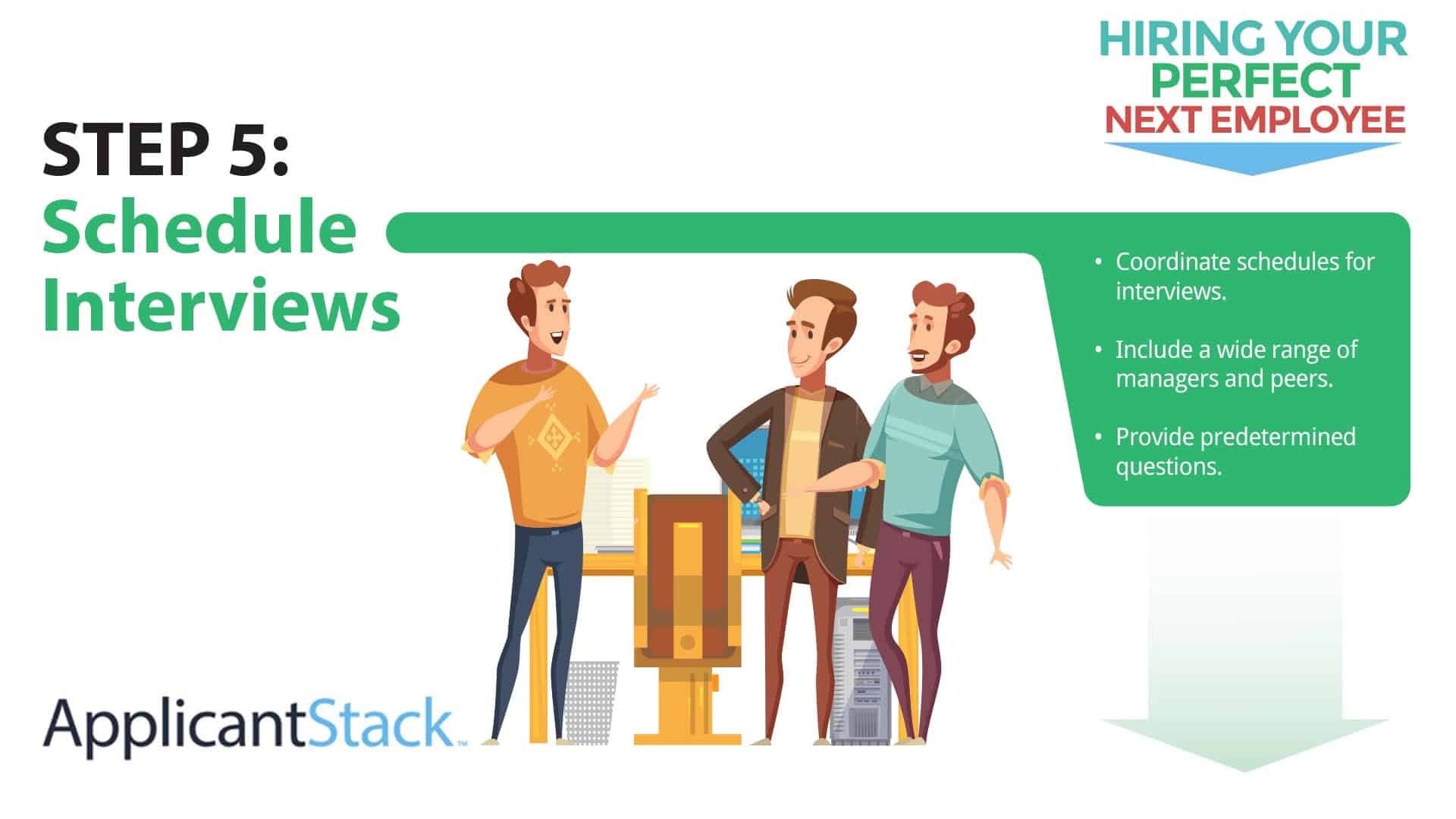
Interview Scheduling for Efficient Hiring
Mar 28, 2022
Applicant Tracking, Interviewing, Recruiting Best Practices


Manual interview scheduling is a headache. It is also a bottleneck in the hiring process for many companies–because there are so many moving parts. There’s the applicant’s availability and each member of the interviewing team has schedule constraints.
With Poor Interview Scheduling, You Can Lose Your Top Candidates
The best talent is on the market only 10 days! If your process breaks down at this juncture, a competing employer may lure them away.
In addition, efficient scheduling creates a better candidate experience. Remember that evaluation works both ways. Not only are you evaluating the applicant–they are judging your company at the same time. Therefore, a modern scheduling process strengthens your employer brand.
Moreover, a good scheduling process saves the hiring team time and frustration. Successful companies create efficient systems and that includes scheduling.
The Challenges of Interview Scheduling
As mentioned, job interview scheduling by phone can be confusing and time-consuming. Manual emails are error-prone as well. You have probably noticed, for example, that listing the wrong time is easy to do when you’re sending dozens of emails. When an applicant needs to reschedule, the chaos starts all over again.
That leads us to the question: How do you get all of your managers and applicants scheduled without all the back-and-forth of emails and schedule alignment?
How to Schedule an Interview
The best practice for scheduling interviews is to use a shared calendar or scheduling software. Google Calendar, for instance, is free. Plus, there are plenty of low-cost apps designed specifically for interview scheduling.
This is how it works:
- 1.All members of the interview team mark their availability on the shared calendar (before sending the link to the candidates)
- 2.The hiring manager clears time slots where everyone is available
- 3.Email or text the candidate the link to the shared calendar or a list of the available slots
- 4.The interviewee chooses one of the pre-cleared slots
- 5.Once confirmed, the hiring manager sends a confirmation email or text
- 6.If it’s an in-person interview, include the address and any parking or building access instructions
- 7.If it’s a video interview, send the link to the meeting and instructions for logging in
ApplicantStack Job Interview Scheduling
ApplicantStack applicant tracking system makes scheduling interviews a breeze, because you let interviewees select a date and time that is mutually available. It eliminates the back-and-forth emails, texts or phone calls.
How ApplicantStack Automates Interview Scheduling
ApplicantStack integrates with Google Calendar and Office 365. You have two ways to schedule: you can choose a time or allow the applicant to select an interview time from pre-cleared calendar slots.
With applicant self-scheduling, the software emails the interviewee a link to your calendar. Then, when they follow the link, they will see your interview calendar. Because you’ve pre-cleared slots, they can only schedule when your team is available.
Let’s review the benefits of automated scheduling in ApplicantStack:
- Improves the applicant experience by allowing self-scheduling from any mobile device
- Decreases time-to-hire by eliminating back-and-forth calls and emails
- Reduces abandoned applications due to schedule confusion
- Allows your hiring team to focus on top candidates instead of manually scheduling interviews
Automated Interview Scheduling Improves the Applicant Journey
It’s getting tougher to find quality employees in today’s labor market. To be competitive, you need to provide an exceptional applicant journey. Confusing interview scheduling, in contrast, downgrades the applicant journey quickly. Efficient scheduling strengthens your company brand. Indeed, you are less likely to lose an applicant due to a clunky interview scheduling process.
This post is part of our hiring series which includes:
-
Schedule Interviews

Content Marketing Manager at Swipeclock
Content strategist and corporate blogger (2000+ posts). Her work has been featured on G2's Learning Hub, Human Resources Today, CloserIQ, Better Buys and over 500 business websites. She plays bluegrass mandolin and enjoys hiking in the red rock wilderness of southern Utah. Connect with me on LinkedIn
Latest posts by Liz Strikwerda ( see all)
- ApplicantStack Featured in Case Study of Home Health Agency & Hospice - November 17, 2022
- Ask Me Anything Recap: How To Configure Job, Candidate and Application Fields - November 17, 2022
- 3 Ways Hiring Software Saves Money for Your Small Business - September 29, 2022

Allie Blackham|Aug 5, 2026
Building an effective hiring process from scratch involves identifying your company’s needs and setting a path to find quality applicants. By examining past hiring practices and implementing new strategies, you can build a more efficient process. Read on for some ways to create a hiring process that gets results. Primary Elements of the Hiring Process […]

Allie Blackham|Jul 29, 2026
The need for high-volume, non-exempt roles in the retail, food service, and healthcare support sectors often outpaces companies’ abilities to hire quickly. In these busy industries, shifts can run 24 hours, and turnover is frequent, creating a challenge for hiring managers. If degree or experience requirements are creating a barrier to finding quality candidates, consider […]

Allie Blackham|Sep 30, 2026
Background checks help small businesses avoid costly hiring mistakes, from resume fraud to license misrepresentation. They help small businesses reduce hiring risk, but running them legally means following FCRA disclosure rules, EEOC anti-discrimination protections, and your state’s fair-chance hiring laws. What Are Background Checks? Employment background checks typically use a third-party professional screening service to verify […]

Verified First|Sep 23, 2026
Guest Post by Verified First Do you screen every candidate the same way? That approach is costing you more than you think. A templated process feels efficient, but it wastes budget on low-risk roles. Worse, it under-protects your safety-sensitive ones. Most organizations don’t catch this until a compliance issue or a safety incident hits. As […]

Allie Blackham|Sep 16, 2026
Shortening time-to-hire reduces the burden on hiring staff and helps you reach top talent faster. Small businesses can use any help they can get to make the hiring process more efficient. An applicant tracking system shortens time-to-hire by automating screening, scheduling, and offer letters, cutting out the manual steps that create the biggest bottlenecks for […]

Allie Blackham|Sep 9, 2026
Q4 tends to hit hiring teams like a freight train. Retail ramps up for the holidays, e-commerce warehouses struggle to keep pace with order volume, and hospitality prepares for back-to-back events. If your applicant pipeline isn’t ready for that surge, you may end up losing out on great candidates and revenue. Here are six steps […]

Allie Blackham|Sep 2, 2026
If your open roles are pulling in three or four times the applications they did two years ago, you’re not imagining it. AI writing tools have made it easier than ever for job seekers to customize a resume and cover letter for every posting in seconds. “Apply to everything” browser extensions allow candidates to blast […]

Allie Blackham|Aug 26, 2026
The hiring process takes time and money, both of which can be tight in small business budgets. When a candidate ghosts you at any stage, it can be demoralizing and expensive. Here are some ways to keep communication flowing to avoid being abandoned by quality prospects. What Is Candidate Ghosting? Ghosting refers to a scenario […]

Allie Blackham|Aug 19, 2026
Hiring new employees is no small task: it takes hours of company time and money to recruit, interview, and select top talent. Once you’ve got a new employee on board, you want to turn that hiring investment into a good experience for both of you. That’s where onboarding comes in. Read on for some effective […]
Allie Blackham|Aug 11, 2026
When someone walks out your office door for the last time, they’re taking valuable insights with them. The question is: will you capture those insights before they’re gone forever? An exit interview represents one of the most underutilized opportunities in business. Done right, it can reveal blind spots in your management, uncover systemic issues, and […]
Allie Blackham|Aug 5, 2026
Building an effective hiring process from scratch involves identifying your company’s needs and setting a path to find quality applicants. By examining past hiring practices and implementing new strategies, you can build a more efficient process. Read on for some ways to create a hiring process that gets results. Primary Elements of the Hiring Process […]
Allie Blackham|Jul 29, 2026
The need for high-volume, non-exempt roles in the retail, food service, and healthcare support sectors often outpaces companies’ abilities to hire quickly. In these busy industries, shifts can run 24 hours, and turnover is frequent, creating a challenge for hiring managers. If degree or experience requirements are creating a barrier to finding quality candidates, consider […]
Allie Blackham|Sep 30, 2026
Background checks help small businesses avoid costly hiring mistakes, from resume fraud to license misrepresentation. They help small businesses reduce hiring risk, but running them legally means following FCRA disclosure rules, EEOC anti-discrimination protections, and your state’s fair-chance hiring laws. What Are Background Checks? Employment background checks typically use a third-party professional screening service to verify […]
Verified First|Sep 23, 2026
Guest Post by Verified First Do you screen every candidate the same way? That approach is costing you more than you think. A templated process feels efficient, but it wastes budget on low-risk roles. Worse, it under-protects your safety-sensitive ones. Most organizations don’t catch this until a compliance issue or a safety incident hits. As […]
Make Recruiting and Onboarding Easy
See for yourself! Fill out the form to start a trial today and see how ApplicantStack can improve your hiring and onboarding processes.
- Comments
This field is for validation purposes and should be left unchanged.
-
First Name*
-
Last Name*
-
Company Name*
-
Phone Number**
-
Business Email*
Watch for your free trial log-in information coming to your inbox!
*You agree to receive SMS messages about your Free Trial.
-
Watch for your free trial log-in information coming to your inbox!
-
*
-
I understand this not a job application and I am based in the US or Canada.
Entiendo que esto no es una solicitud de empleo y que resido en Estados Unidos o Canadá.
-
Start your free trial
Δ
We use cookies to ensure that we give you the best experience on our website. If you continue to use this site we will assume that you are happy with it.OK
Notifications